Chasing Benchmarks: The Never-Ending Upgrade Cycle That's Draining PC Gamers Dry
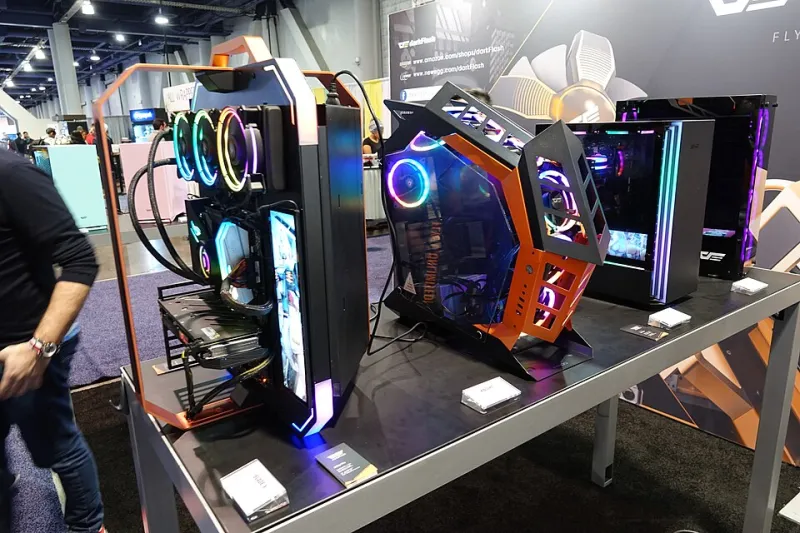
Photo: Notdjey, CC BY 2.0, via Wikimedia Commons
Let's paint a familiar picture. You saved up, did the research, watched approximately forty-seven YouTube videos, and finally pulled the trigger on a high-end gaming PC build. We're talking a top-tier GPU, a fast processor, 32 gigs of RAM, the whole deal. It ran everything at ultra settings with frames to spare. You were living the dream.
Then, almost without warning, eighteen months passed. Suddenly your friends are talking about the new GPU generation, tech forums are buzzing about how your card is "mid-tier now," and somehow — inexplicably — your perfectly capable rig starts to feel embarrassing. Nothing about your machine actually changed. But your perception of it? Completely wrecked.
Welcome to the PC upgrade trap. It's one of the most expensive psychological games in all of gaming culture, and the hardware industry has been running it on us for decades.
The Marketing Machine Behind Your Insecurity
Hardware manufacturers like NVIDIA, AMD, and Intel are genuinely incredible at one specific thing: making you feel like you're already behind. Every product launch comes loaded with jaw-dropping benchmark numbers, cinematic trailers, and carefully selected comparisons designed to make last year's flagship look like a potato.
Here's the thing, though — those benchmark comparisons almost always pit the brand-new card against hardware that's two or even three generations old. The jump from the current gen to the previous gen? Often surprisingly modest in real-world gaming scenarios. We're frequently talking single-digit frame rate improvements in games you're already playing at well above 60fps.
NVIDIA's "DLSS" and AMD's "FSR" technologies are genuinely useful features, no argument there. But they've also become powerful marketing levers. Every time a new version drops, it's framed as something your older card simply can't have — even when the actual in-game difference is nearly imperceptible to the human eye at typical viewing distances.
The language used in these launches matters too. Words like "revolutionary," "next-generation," and "future-proof" do a lot of heavy lifting. Spoiler alert: nothing in PC hardware is ever truly future-proof. That's not a bug in the marketing — it's the entire feature.
Real Benchmarks vs. What You Actually Need
Here's where things get genuinely interesting. Pull up benchmark data for a mid-to-high-end GPU from two or three years ago and compare it to what most popular games actually demand today. The results are often humbling — for the upgrade narrative, not for your old card.
Games like Baldur's Gate 3, Elden Ring, Cyberpunk 2077 (post-patches), and Call of Duty: Warzone are some of the most demanding and widely played titles right now. On a GPU from a couple of years back running at 1080p or even 1440p, most of these games hit playable, enjoyable frame rates at high settings without breaking a sweat. You might not be maxing out ray tracing on every surface, but you're having a great time.
The 4K, max-settings, 144fps benchmark obsession is real, but it's worth asking yourself honestly: do you actually notice the difference between 90fps and 144fps in your favorite RPG? Are you playing competitive esports titles where every millisecond genuinely matters? For a huge portion of PC gamers, the honest answer is no.
The gap between "good enough" and "cutting edge" has widened significantly in terms of cost while narrowing considerably in terms of real-world experience.
The Social Pressure Nobody Talks About
Beyond the marketing, there's a quieter force at work: community culture. PC gaming spaces — subreddits, Discord servers, YouTube comment sections — can be brutal about specs. Posting your build and having someone call it "outdated" stings in a way that's hard to shake, even when your rig is objectively still capable.
This is the social dimension of the upgrade trap. When your gaming identity gets tied to your hardware specs, suddenly an RTX 3080 doesn't feel like a fantastic graphics card — it feels like a statement about who you are. And hardware companies know this. Their messaging isn't just technical; it's deeply aspirational and, frankly, a little tribal.
The enthusiast community, for all its passion and expertise, can inadvertently become an unpaid marketing arm for manufacturers pushing the upgrade cycle forward.
Building for Longevity: A Smarter Playbook
So what's the move if you want to stop hemorrhaging money every eighteen months? A few practical principles that actually hold up:
Buy one tier below the absolute top. The flagship GPU at launch carries a massive premium for marginal gains. The card one step down almost always delivers 85-90% of the performance for significantly less money — and holds its value better in the used market.
Target 1440p, not 4K. For most gamers in the US, a 1440p monitor at 144Hz is the sweet spot. It's demanding enough to feel premium, achievable enough that mid-tier hardware crushes it, and the upgrade path to the next level isn't as punishing.
Ignore launch-window benchmarks. Wait sixty to ninety days after a new GPU launches. Real-world reviews, driver maturity, and actual game performance data paint a far more accurate picture than controlled launch-day tests.
Set a replacement schedule, not an upgrade impulse. Decide upfront that your GPU lasts four years. That commitment alone will save you thousands and, weirdly, make you enjoy what you have more.
Invest in the parts that actually age well. A quality case, power supply, monitor, and peripherals last far longer than GPUs. Spending more there and less on chasing the latest silicon is genuinely smart long-term budgeting.
The Bottom Line
Your $3,000 build isn't outdated. It's been told it's outdated, which is a very different thing. The PC hardware industry is one of the most innovative spaces in all of tech, and that innovation is genuinely exciting. But innovation designed to sell products doesn't always align with your actual needs as a gamer.
The best gaming PC isn't the one with the highest benchmark score — it's the one that lets you enjoy the games you love without constantly pulling you out of the experience to wonder if your frame rate could be three percent higher. That machine? You might already own it.