Sticker Shock Doesn't Cover It: The GPU Market Is Still a Mess and Gamers Are Paying the Price
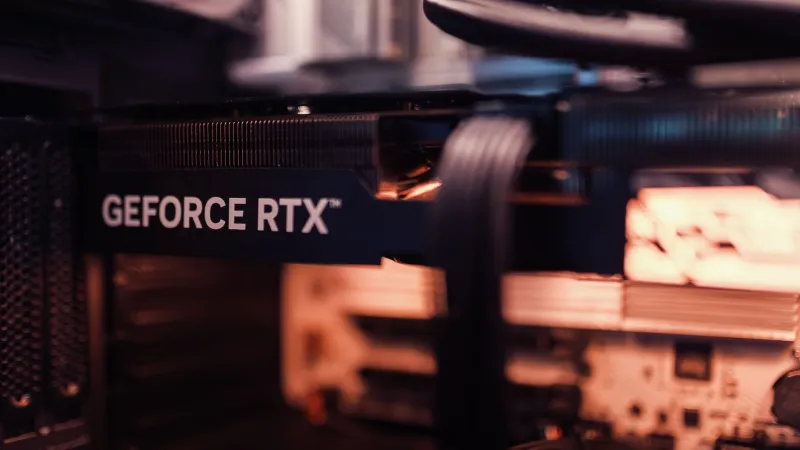
Remember when a mid-range graphics card cost around $300 and you could just walk into a Micro Center and grab one off the shelf? That era feels almost mythological now. Like dial-up internet or paying $60 flat for a complete game — something you vaguely remember but can't quite believe was real.
The GPU shortage that exploded during the pandemic was supposed to be temporary. Supply chains would recover. Crypto would cool off. Scalpers would move on to the next thing. And yet here we are, and the market still feels fundamentally broken in ways that even dedicated hardware nerds struggle to fully explain.
So what actually happened? And more importantly — what are PC gamers supposed to do right now?
How We Got Here: A Perfect Storm That Never Fully Cleared
The short version: everything went wrong at once, and the industry used that chaos as cover to reset pricing expectations permanently.
COVID disrupted semiconductor fabrication across the globe. TSMC, Samsung, and the handful of other fabs capable of producing cutting-edge chips were already running near capacity. Then demand for electronics — laptops, consoles, cars, appliances — spiked simultaneously. GPUs got caught in a brutal queue alongside everything else.
At the same time, Ethereum mining went absolutely nuclear. Crypto miners weren't just buying cards; they were deploying automated bots to vacuum up inventory the moment it hit retail listings. Individual gamers trying to buy a single RTX 3080 were competing against warehouse-scale operations running purchase scripts around the clock. It wasn't a fair fight. It was never a fair fight.
Scalpers piled on. Cards that listed at $699 were flipping on eBay for $1,400 or more. Some people paid it because they needed to work from home and gaming was one of the few remaining outlets during lockdown. The market absorbed those prices — and the manufacturers noticed.
The 'Recovery' That Wasn't
Ethereum eventually moved to proof-of-stake in 2022, which theoretically should have dumped millions of used mining cards back into the market and tanked GPU prices. And for a brief window, it kind of did. Used RX 580s and RTX 3060s flooded platforms like eBay and Facebook Marketplace. Some gamers grabbed legitimate deals.
But the new card market? It barely flinched.
Nvidia launched the 40-series with pricing that treated the pandemic-era gouging as the new baseline. The RTX 4080 debuted at $1,199. The 4090 hit $1,599. These weren't niche enthusiast products priced for the top one percent — they were presented as mainstream flagship options. The RTX 4060 Ti, a card that should have been an accessible mid-range option, launched at $499. For context, the RTX 2060 — a comparable generational equivalent — launched at $349 back in 2019.
AMD hasn't exactly been the hero of this story either. Their RX 7000 series launched at competitive-but-still-elevated price points, and while they've offered better value at certain tiers, neither team red nor team green has made a serious push to reclaim the sub-$300 sweet spot that used to define mid-range PC gaming.
The uncomfortable reality is that both companies discovered gamers would pay more. The shortage gave them the perfect excuse to test new price ceilings — and those ceilings stuck.
Artificial Scarcity: The Conspiracy Theory That Turned Out to Be Partially True
Throughout the shortage, some gamers accused manufacturers of deliberately constraining supply to prop up prices. The companies denied it. But what's emerged since paints a murkier picture.
Nvidia in particular has been criticized for releasing cards in limited quantities — sometimes absurdly limited — at launch, which creates the appearance of demand and keeps prices elevated at retail. The Founders Edition cards are notoriously hard to find at MSRP. Board partner cards often launch above suggested retail. By the time supply normalizes, the next generation is already being teased, making the current cards feel outdated even if they're perfectly capable.
It's a treadmill. And it's designed to keep you running.
What PC Gamers Are Actually Doing Right Now
Here's the thing: the community has adapted, even if the market hasn't fixed itself.
A lot of builders are leaning hard into the used market. A previous-gen card like the RTX 3070 or RX 6700 XT can still run modern titles at 1080p and 1440p with respectable settings, and you can find them for $200-$300 from miners offloading hardware or gamers upgrading. The value proposition is genuinely solid if you're willing to buy secondhand and do your homework on the card's history.
Others are delaying builds entirely and leaning on consoles or cloud gaming services like GeForce Now or Xbox Cloud Gaming to scratch the itch. It's not a perfect substitute — input latency, game library gaps, and subscription costs are real drawbacks — but for casual to moderate players, it's a functional workaround while the market sorts itself out.
Some builders are also rethinking what "good enough" looks like. The obsession with maxing out every setting at 4K has cooled for a lot of people. Running games at 1080p on a $250 card and actually enjoying them beats spending $800 chasing benchmarks that most monitors can't even display properly.
Will Prices Ever Go Back to Normal?
Honest answer: probably not in the way we remember.
The pre-pandemic GPU market was, in retrospect, unusually consumer-friendly. Competition between AMD and Nvidia was fierce, manufacturing costs were lower, and both companies were hungry for market share. Those conditions don't fully exist anymore. Nvidia dominates the discrete GPU market by a wide margin, which reduces competitive pressure. Manufacturing costs for cutting-edge nodes have genuinely increased. And the companies have demonstrated that gamers will pay more — which removes the incentive to charge less.
What could shift things? Intel's Arc lineup, while still maturing, introduces a third competitor that could pressure pricing at the lower end. AMD could make a more aggressive push into the sub-$300 tier. Regulatory scrutiny of semiconductor market practices is slowly increasing. And if a significant economic downturn hits discretionary tech spending, manufacturers may have to recalibrate.
But waiting for salvation from a corporation isn't a strategy. The smarter play is shopping the used market, building only when you have a genuine need rather than chasing the latest launch, and being honest with yourself about what your actual gaming habits require. You probably don't need a $700 card to play the games you actually play.
The Bottom Line
The GPU shortage technically ended. The damage it did to pricing culture didn't. PC gaming is still one of the most rewarding platforms out there — flexibility, modability, backward compatibility, and sheer performance ceiling make it worth the investment for the right player. But the days of casually dropping a couple hundred bucks on a solid mid-range card and calling it done? Those aren't coming back anytime soon.
Build smart. Buy used when it makes sense. And stop waiting for the market to reward your patience — because it won't.