Seventy Bucks a Pop: What Modern AAA Games Actually Owe You

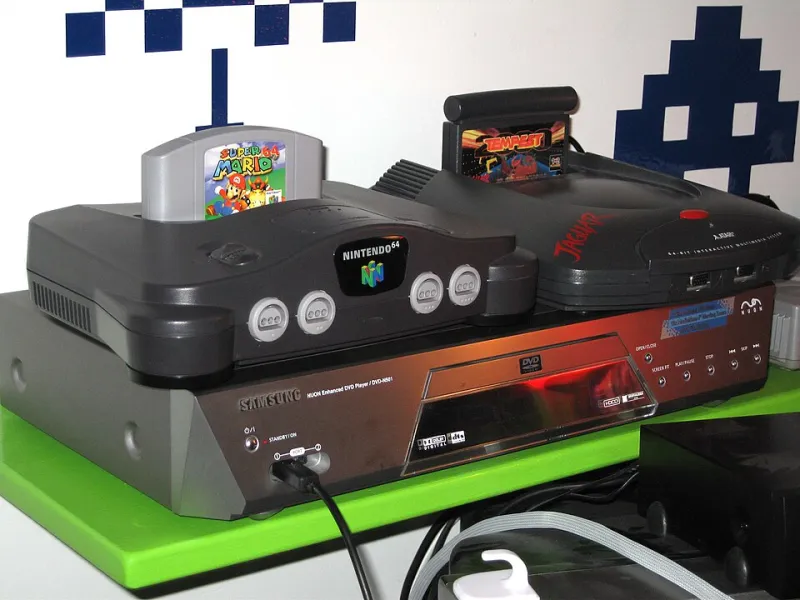
Photo: Wilfredor, CC0, via Wikimedia Commons
Let's be honest — nobody threw a party when game prices jumped to $70. There was no big announcement, no press conference with confetti. One day a $60 standard existed, and then it didn't. Sony moved first with the PS5 launch lineup, Microsoft followed, and just like that, the new normal was set without so much as a formal apology.
That was a few years ago now. Enough time has passed to take a real look at whether the price hike was justified — or whether we've all just been slowly cooked like frogs in a pot we didn't notice was heating up.
The Justification That Was Sold to Us
The industry's defense of $70 games came in a few flavors. Development costs have skyrocketed. Teams are bigger. Games are more ambitious. And hey, $60 had been the standard since the Xbox 360 era — roughly 2005 — so adjusted for inflation, $70 was actually a bargain. That last argument, while technically true, conveniently ignored the fact that the industry had found dozens of other ways to monetize players in the meantime. Battle passes, cosmetic stores, season passes, deluxe editions — publishers weren't exactly leaving money on the table during those "affordable" years.
So the real question isn't whether $70 is historically reasonable. It's whether you're getting $70 worth of game.
When the Math Actually Works Out
To be fair, some titles genuinely deliver. Games like Elden Ring, Baldur's Gate 3, and God of War Ragnarök represent what a premium price point should look like. Hundreds of hours of content, minimal post-launch monetization, and the kind of polish that makes you feel like a team actually cared about shipping something complete. When a game runs you $70 and you log 80, 100, or 150 hours into it, you're talking about cents per hour of entertainment — cheaper than most movies, cheaper than a night out, cheaper than a streaming subscription over the same period.
Those are the wins. And they matter. They exist.
But they're also increasingly the exception.
The Games That Don't Earn It
For every BG3, there are several titles that hit $70 at launch in a state that would've been embarrassing a decade ago. Games with progression systems clearly designed around monetization. Live-service titles that charge full price and then expect ongoing investment just to stay current with the content cycle. Sequels that feel like numbered updates rather than genuine creative leaps.
The sports game genre is maybe the most glaring example. Annual releases from major publishers routinely hit full price with roster updates and incremental improvements that would've qualified as a patch in any other era. Yet the franchise loyalty — particularly in football and basketball titles — is strong enough that millions of American gamers keep buying every year. Publishers know this. They're not blind to the leverage that exclusive licenses hand them.
And that's really the crux of it. A $70 price tag only works as a consumer pressure point if players are willing to walk away. When a franchise owns your emotional investment, that leverage disappears.
The Post-Launch Support Wildcard
Some publishers have tried to reframe $70 as an entry point rather than a complete product. The argument goes that ongoing updates, free content drops, and community events add value over time, making the initial cost more palatable. And sometimes that's genuinely true — certain titles have grown substantially after launch in ways that retroactively justify the price.
But this argument also creates a convenient escape hatch. A game can launch rough, lean on "we're still working on it" messaging, and coast on goodwill while the real-money store runs 24/7. Post-launch support is only a valid justification if the base game holds up on its own terms at launch. Too many studios are using the promise of future patches as a substitute for shipping something finished.
What Players Are Actually Deciding
Here's something interesting: the market is starting to push back, even if quietly. Wait-to-buy culture has exploded. Reddit threads, Discord servers, and YouTube channels dedicated to "is it worth full price?" content get massive engagement. The concept of waiting three to six months for a $30 sale has never been more normalized — and publishers are noticing. Some titles have seen dramatically front-loaded sales followed by sharp drops, suggesting that core audiences buy day one out of habit while casual buyers increasingly wait.
Game Pass and PlayStation Plus have also fundamentally changed the calculus. Why spend $70 on a game that might hit a subscription service in six months? This tension is real, and it's creating weird incentive structures where publishers have to decide whether day-one subscription inclusion is worth the trade-off in full-price sales.
So, Is It Worth It?
There's no single answer, which is kind of the point. A blanket $70 price tag applied to both a 120-hour RPG and a six-hour linear action game that shipped with three multiplayer maps is absurd on its face. The problem isn't the number — it's the uniformity.
What players deserve at $70 is a complete, functional product that respects their time and doesn't treat the base purchase as a funnel into further spending. Some games deliver that. A lot don't.
Until the industry builds more transparent pricing that reflects actual content scope, the smartest move is exactly what more players are already doing: slow down, read the reviews, watch some streams, and decide whether a specific game earns that price tag on its own merits. Your $70 is a vote. Cast it like one.