Playing Smarter: How Speedrun Culture Turned Everyday Gamers Into Optimization Nerds (And Why That Rocks)
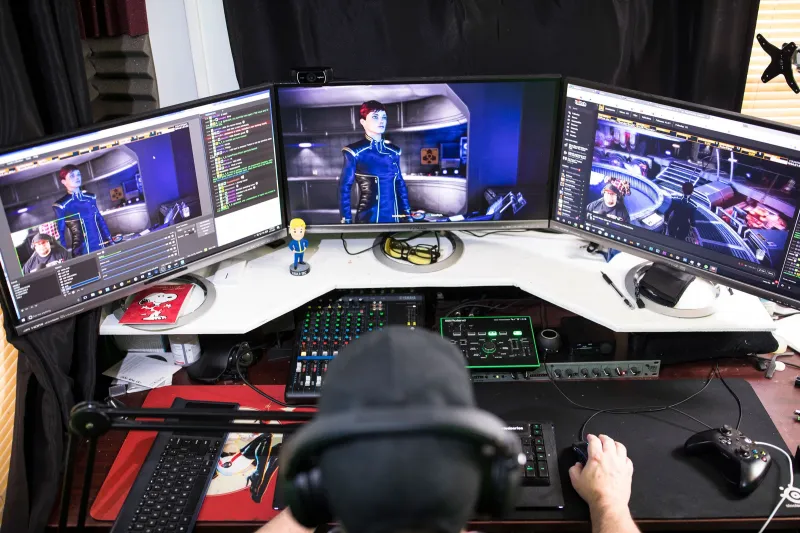
Photo: gamer watching speedrun Twitch stream on computer monitor, via media.wired.com
You probably haven't submitted a run to Speedrun.com. You're likely not chasing a world record, and you're definitely not spending six hours routing the optimal path through a Zelda dungeon. And yet—there's a decent chance that speedrunning culture has already changed the way you play games without you even realizing it.
That's not an exaggeration. Over the past several years, the techniques, vocabulary, and mindset that originated in competitive speedrunning communities have quietly filtered into mainstream gaming. The result is a new kind of casual player: someone who finishes games faster, explores them more intentionally, and gets a different kind of satisfaction from a playthrough—one that's less about time and more about mastery.
From GDQ to Your Living Room
Games Done Quick—the charity speedrunning marathon that airs twice a year and routinely raises millions of dollars—deserves a lot of credit for making speedrunning visible to people who would never have sought it out otherwise. Millions of viewers tune in, and most of them aren't speedrunners. They're just gamers who got curious.
What those viewers saw was something unexpectedly compelling: people who knew games so deeply that they could bend them to their will. Skipping entire sections. Finding routes the developers never intended. Turning a 40-hour RPG into a 90-minute showcase of mechanical mastery. It was fascinating in the same way watching a chef break down a whole animal is fascinating—even if you're never going to do it yourself, the expertise is magnetic.
That exposure planted a seed. And platforms like Twitch and YouTube made it easy for curious players to fall down rabbit holes of speedrun tutorials, route guides, and technique breakdowns for games they actually played.
The Techniques That Crossed Over
Not everything from competitive speedrunning is practical for casual play. Frame-perfect inputs and precise memory manipulation are skills that take hundreds of hours to develop and aren't exactly fun to grind if you're not chasing a leaderboard.
But a surprising amount of speedrun knowledge is transferable—and genuinely useful for players who just want to get more out of their games.
Sequence breaking is probably the most accessible example. In a lot of games, the intended order of events is a suggestion, not a rule. Speedrunners find the cracks in that structure and exploit them. Casual players who learn about sequence breaks in games like The Legend of Zelda: Breath of the Wild or Dark Souls often discover that they can access areas earlier, grab key items sooner, or skip tedious sections entirely—making the game feel fresher and more open.
Route optimization is another one. Even if you're not racing the clock, thinking about the most efficient path through a game's content changes how you approach it. Instead of wandering aimlessly, you develop a loose plan. You start noticing when the game is funneling you through content you don't need. You make choices. That shift from passive to active engagement is genuinely satisfying.
Skip techniques—whether that's a well-timed jump, a dialogue cancel, or a specific movement exploit—give players a sense of agency that the intended experience sometimes doesn't. Learning that you can skip a cutscene you've seen 15 times by doing a very specific thing feels like finding a secret passage. It rewards curiosity and knowledge in a way that just following the critical path never does.
Discord Is Where the Real Learning Happens
If Twitch is where people watch optimized play, Discord is where they learn it.
Almost every major game with a speedrunning community has a Discord server, and those servers are often welcoming to players who aren't serious runners. They're packed with guides, clipped demonstrations of techniques, and people who genuinely love talking about how games work at a mechanical level.
What's interesting is that these spaces have evolved beyond pure speedrunning. You'll find channels dedicated to 'casual route optimization'—players who want to do a clean, efficient playthrough of a game without grinding for world records. You'll find discussions about which skips are worth learning versus which ones are only useful at the highest competitive level. The community has developed a kind of tiered knowledge base that serves everyone from world-record chasers to someone who just wants to replay Hollow Knight more intentionally.
This accessibility is relatively new. Speedrunning communities used to have a reputation for being insular and technical to the point of exclusion. That reputation has faded considerably, partly because the communities themselves recognized that welcoming curious outsiders made their spaces more interesting and their knowledge more widely shared.
The Mindset Shift Is the Real Story
Here's what's actually interesting about all of this: the most significant thing speedrun culture has exported to mainstream gaming isn't any specific technique. It's a way of thinking about games.
Traditional gaming culture frames progression as something that happens to you. You follow the story. You complete the objectives. The game leads, you follow. Speedrun culture inverts that. The game becomes a system to understand and engage with actively. You're not just experiencing it—you're interrogating it.
For a lot of players who discover this mindset, it completely revitalizes games they thought they'd exhausted. Going back to a game you've already finished and asking 'how well do I actually understand this?' is a different and often more rewarding question than 'what should I do next?'
This shows up in player behavior in subtle ways. Players who've absorbed some speedrun thinking tend to pay more attention to loading zones and triggers. They notice when enemy AI behaves predictably. They experiment with movement in ways that feel playful rather than purposeful. They're having fun with the game's mechanics rather than just consuming its content.
You Don't Have to Run to Benefit
The beauty of all this is that none of it requires a timer or a leaderboard submission. You can pull individual techniques and ideas out of speedrun culture and apply them to your own playthroughs entirely on your own terms.
Watch a GDQ run of a game you love. Browse the Speedrun.com guide for your current playthrough. Drop into a game's Discord and ask what techniques casual players find useful. You'll almost certainly find something that changes how you play—even if it's just a small thing, like a shortcut you never knew existed or a mechanic you'd been misunderstanding for hours.
Speedrunning started as a competitive pursuit for a very dedicated niche. What it's quietly become is one of the most interesting sources of game literacy in the hobby. And that's a win for every kind of player—whether you're chasing the clock or just chasing a good time.